
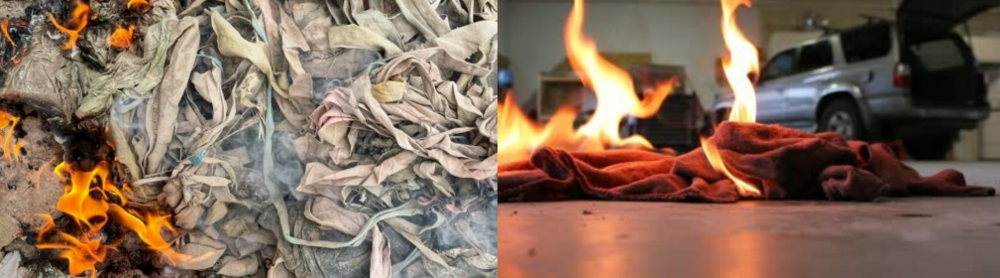
It may sound surprising, but oily rags can catch fire without a spark, flame, or electrical source.
Recently, Carefree Fire Station 821 responded to a brush fire caused by oily rags from a staining project. Thanks to the homeowner’s quick action and the crew’s less than three-minute response time, the fire was extinguished safely and efficiently.
Drying oils, such as linseed oil, tung oil, Danish oil, teak oil, and some wood stains, varnishes, or finishes, cure by reacting with oxygen. This chemical reaction creates heat. When oily rags are crumpled, piled together, or tossed into a trash can, that heat can become trapped and build until the cloth ignites.
This can happen in garages, workshops, sheds, storage rooms, trash cans, or anywhere used rags are left bunched up. Fires caused by oily rags often happen hours after a project is finished, when people least expect it.
Here in Arizona, this risk is especially important to take seriously. Our hot, dry climate, low humidity, and abundance of dry vegetation can make fires spread quickly once they start. In Carefree, this concern is even greater because of our rural desert landscape is highly susceptible to wildfires.
A small fire in a garage, shed, or trash bin can quickly become a much larger threat to nearby homes, properties, natural open spaces, and the desert landscape we all work hard to protect.
To help prevent a fire:
Lay oily rags flat outdoors to dry in a single layer
Hang them over a metal railing or nonflammable surface
Keep them away from buildings, vehicles, fences, vegetation, and other combustible materials
Store used rags in a metal container with a tight-fitting lid, half-filled with water and detergent
Never place oily rags in a plastic bin, cardboard box, paper bag, or regular trash can
Whether you are staining furniture, sealing wood, refinishing a deck, or working on a home project, take a few extra minutes to handle oily rags safely.
A simple safety step can help prevent a dangerous fire and protect our homes, community, and surrounding desert.